
Nitrogen Leak Testing
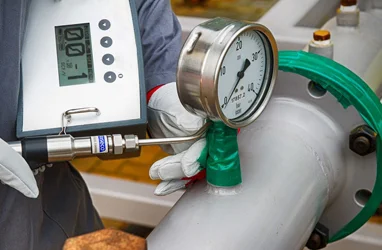
Nitrogen Leak Testing including Snoop Bubble Testing and Nitrogen-Helium Leak Testing, are performed to detect even the smallest leaks in critical hydrocarbon systems. Our testing solutions help to maintain system integrity by providing operational safety and compliance in oil & gas refineries, petrochemical plants, and offshore facilities.
Nitrogen Leak Testing including Snoop Bubble Testing and Nitrogen-Helium Leak Testing, are performed to detect even the smallest leaks in critical hydrocarbon systems. Our testing solutions help to maintain system integrity by providing operational safety and compliance in oil & gas refineries, petrochemical plants, and offshore facilities.
Overview
Our Nitrogen and Helium leak testing methods use 99% nitrogen & 1% helium and advanced detection techniques to locate leaks in complex piping and equipment. These tests are performed to keep the airtight systems risk-free and prevent hazardous leaks. The test can be done while installing or for maintenance operations.
Frequently Asked Questions
How accurate is Nitrogen-Helium Leak Testing?
It can detect leaks as small as 10⁻⁷ mbar · l/s, making it ideal for high-precision applications in gas-tight systems.
Is nitrogen leak testing safe for all pipeline materials?
Yes, nitrogen is an inert gas, making it safe for all hydrocarbon pipelines, vessels, and process equipment.
What happens if a leak is found during testing?
If a leak is detected, the affected section is isolated, repaired, and re-tested until it meets the acceptance criteria.
How does Tritorc ensure accurate results?
We use pressure & temperature chart recorders, ultrasonic detectors, and mass spectrometers to ensure precise measurements and compliance with industry standards.
What is the difference between Nitrogen Snoop Bubble Testing and Nitrogen-Helium Leak Testing?
Snoop bubble testing uses nitrogen and a soap/snoop solution to detect leaks visually, while nitrogen-helium testing uses helium as a tracer gas, allowing detection of microscopic leaks with advanced instruments.